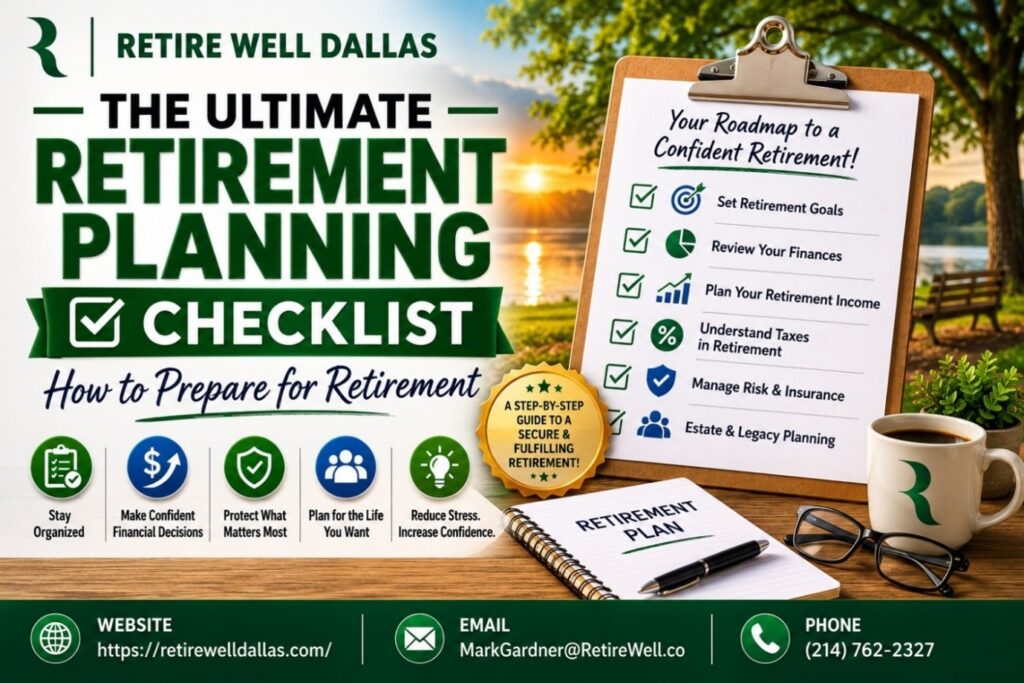
Overview: A successful retirement is about more than saving money. You need a clear plan for income, taxes, healthcare, debt, investments, and legacy goals. This guide walks you through a practical retirement planning checklist that helps you prepare for retirement with confidence, reduce financial surprises, and create a reliable income strategy designed to last throughout your retirement years.
Retirement is not a finish line. It is a new chapter. The challenge is making sure your money supports the life you want for decades to come. A well-built retirement planning checklist helps you organize the key decisions before leaving work. From income planning to healthcare costs, every piece matters. This checklist gives you a practical roadmap. Think of it as a guide that helps you avoid costly surprises and move into retirement with greater confidence.
This retirement checklist can help you organize the financial decisions that matter most.
Step 1 – Define Your Retirement Timeline
Before you focus on numbers, focus on your vision. Ask yourself a simple question: When do you want to retire? The answer affects nearly every financial decision ahead. A retirement date determines how long you have to save and how long your money may need to last.
Next, picture your ideal lifestyle. Will you travel often? Downsize your home? Start a small business? Some people work part-time during retirement to stay active and supplement income. Others prefer complete freedom. The clearer your picture, the easier it becomes to build a realistic retirement planning checklist.
Step 2 – Calculate Retirement Income Needs
Many people underestimate how much income they will need. Start by calculating monthly living expenses. Include housing, food, healthcare, transportation, travel, and leisure activities. Then account for inflation, which slowly increases costs over time.
A strong planning for retirement checklist also includes emergency reserves. Unexpected expenses rarely send advance warnings. Your retirement income may come from Social Security, pensions, retirement savings, and investment income. The goal is simple: create dependable cash flow without putting unnecessary pressure on your savings.
Step 3 – Review Retirement Accounts
Your retirement accounts deserve a close review. Examine your IRA accounts, 401(k)s, Roth accounts, and taxable brokerage accounts. Each account follows different tax rules, which can affect how much income you keep.
Review contribution levels while you are still working. Then think ahead to distributions. Some accounts may require mandatory withdrawals later. Understanding how these accounts work together helps create a smoother retirement income strategy and reduces unnecessary tax surprises.
Step 4 – Build an Income Distribution Plan
Saving money is only half the story. Spending it wisely matters just as much. Retirement should feel like receiving a paycheck, even when employment income stops.
Create a withdrawal strategy that balances income needs with long-term sustainability. Consider which accounts should be used first and which should continue growing. A thoughtful distribution plan can help preserve assets, manage taxes, and support your lifestyle throughout retirement.
Step 5 – Evaluate Tax Planning Opportunities
Taxes can quietly reduce retirement income if they are ignored. That is why tax planning deserves a permanent place on your checklist for retirement planning.
Look at opportunities such as Roth conversions, withdrawal timing strategies, and future tax bracket management. Medicare premiums may also be affected by income levels. Small adjustments today can create meaningful tax savings later. The result is simple: more of your money stays available to support your retirement goals.
Step 6 – Prepare for Healthcare Costs
Healthcare often becomes one of the largest retirement expenses. Medicare helps, but it does not cover everything. Premiums, deductibles, prescriptions, and specialist visits can add up quickly.
Long-term care planning deserves attention as well. Whether through insurance solutions or personal savings, having a strategy can protect retirement assets from unexpected healthcare costs. Think of healthcare planning as a financial safety net that helps protect your future lifestyle.
Step 7 – Pay Down High-Interest Debt
Debt can make retirement feel heavier than it needs to be. High-interest credit card balances deserve immediate attention. The less debt you carry, the more flexibility you gain.
Review mortgage obligations as well. Some retirees prefer entering retirement mortgage-free. Others choose to keep low-interest loans while preserving liquidity. The right choice depends on your overall financial picture. The key is reducing financial stress and simplifying monthly expenses.
Step 8 – Update Estate and Beneficiary Planning
Your retirement plan should reflect your wishes for family and loved ones. Review wills, trusts, powers of attorney, and beneficiary designations regularly. Life changes, and outdated documents can create unnecessary complications.
Beneficiary forms are especially important because they often override instructions elsewhere. A quick review today can help ensure assets transfer according to your intentions and support the people who matter most to you.
Step 9 – Stress-Test Your Retirement Plan
A retirement plan should work in good times and difficult times. That is why stress testing is essential. A complete retirement preparation checklist evaluates how your plan performs during inflation, market downturns, longer life expectancy, and rising healthcare expenses.
Think of this step as a practice drill before the real game begins. Identifying weaknesses now gives you time to make adjustments before retirement starts. Confidence comes from preparation, not guesswork.
Step 10 – Meet With a Retirement Planning Professional
Retirement planning involves many moving parts. Income strategies, investment management, tax planning, healthcare costs, and estate considerations often overlap. One decision can affect several others.
Working with a retirement planning professional helps bring those pieces together. A personalized strategy can help you transition from saving money to generating reliable income while keeping taxes and risks under control. A 360-degree approach often creates better outcomes than focusing on individual accounts alone.
Conclusion
Retirement planning works best when income, taxes, healthcare, investments, debt, and long-term goals work together. Each decision affects another part of your financial life. A thoughtful preparing to retire checklist helps create clarity, reduce uncertainty, and support a more secure future. The sooner you start planning, the more flexibility you can build into your retirement years.
Create a Retirement Plan Built Around Your Goals
Whether retirement is five years away or just around the corner, we at Retire Well Dallas help review income strategies, retirement risks, and long-term financial opportunities.
Frequently Asked Questions
1.What should be on a retirement planning checklist?
A retirement plan should include savings, retirement income sources, tax planning, healthcare preparation, investment reviews, debt management, and estate planning considerations.
2. When should I start preparing for retirement?
The earlier you begin, the more options you have. However, meaningful improvements can still be made even if retirement is only a few years away.
3. How much money do I need to retire?
The answer depends on your desired lifestyle, spending habits, healthcare needs, life expectancy, and available income sources.
4. Why is a retirement preparation checklist important?
A checklist creates structure, reduces uncertainty, and helps ensure important financial decisions are not overlooked before retirement.
5. What is the biggest retirement planning mistake?
Many retirees focus only on savings balances. Income planning, taxes, healthcare expenses, and withdrawal strategies are equally important.