

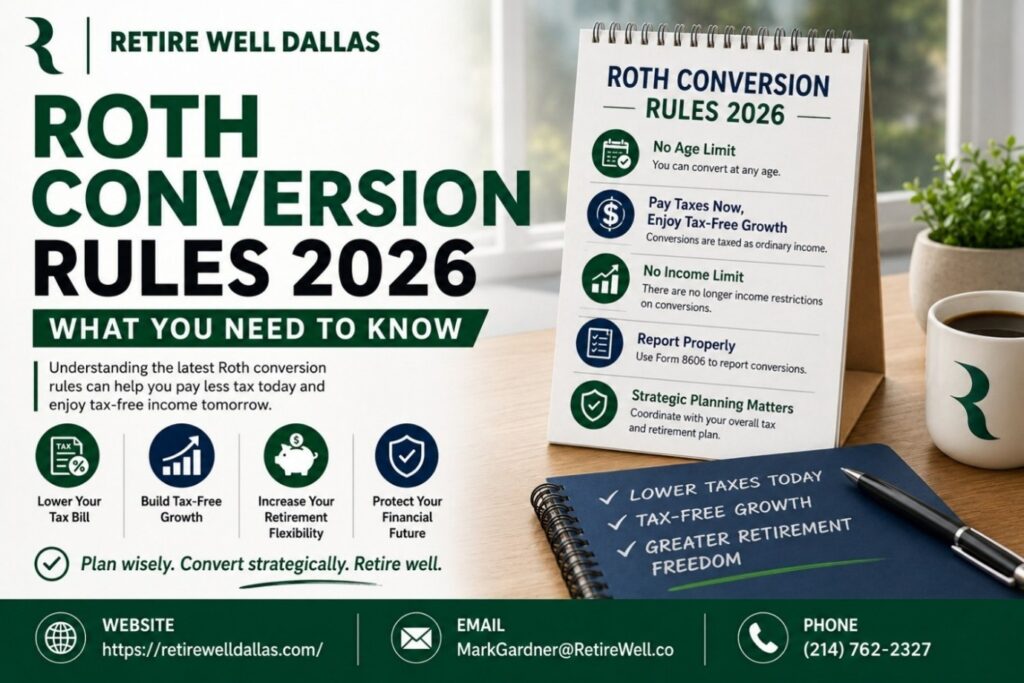
Overview: Roth conversions can help reduce future taxes, create tax-free retirement income, and improve estate planning flexibility. However, timing matters. This guide explains Roth conversion rules 2026, taxes, the 5-year rule, Medicare considerations, and retirement planning strategies in simple terms so you can make informed decisions before converting retirement savings.
A Roth conversion can be a smart move if you want more control over taxes during retirement. Yet many retirees focus on potential benefits and miss the fine print. Understanding ROTH conversion rules before moving money into a Roth IRA can help you avoid costly surprises, manage taxes wisely, and build a stronger retirement income plan.
Many people explore conversions because future qualified withdrawals may be tax-free. Others want greater flexibility, fewer tax concerns later, or better legacy planning opportunities. Still, taxes are often due when you convert, which makes timing critical. Understanding the ROTH conversion rules 2026 landscape may help you make more informed retirement decisions.
Understanding the rules on Roth conversions may help retirees avoid costly mistakes and improve long-term planning.
What Is a Roth Conversion?
A Roth conversion happens when you move money from a Traditional IRA or certain employer-sponsored retirement accounts into a Roth IRA. Think of it like moving money from one tax bucket into another. The move itself may trigger taxes today, but future qualified withdrawals can potentially be tax-free.
When reviewing the rules on ROTH conversions, it helps to remember one simple idea. You are choosing to pay taxes now in exchange for possible tax advantages later. For many retirees, this decision becomes part of a broader retirement income and tax strategy.
What Roth Conversion Rules Should Every Retiree Understand?
Before converting retirement assets, focus on five key areas. These include taxes, income levels, timing, withdrawal rules, and long-term retirement planning goals. Each factor affects the outcome.
A conversion should never be viewed in isolation. It works best when coordinated with retirement tax planning, income planning, IRA planning, and withdrawal strategies. Looking at the entire financial picture often produces better results than focusing on taxes alone.
Rule #1 – Taxes Are Due in the Year of Conversion
This is the rule many retirees overlook.
When you convert money from a Traditional IRA into a Roth IRA, the converted amount is generally treated as taxable income during that year. The IRS sees the conversion as money leaving a tax-deferred account.
Understanding the rules for ROTH conversion starts with tax bracket awareness. A large conversion could push you into a higher tax bracket. It may also increase taxation on other income sources.
Many retirees spread conversions across several years. This approach may help smooth out taxable income and reduce the risk of an unexpected tax jump. Think of it as filling a bucket slowly rather than dumping everything in at once.
Rule #2 – Understand the 5-Year Rule Roth Conversion Requirement
One of the most misunderstood retirement rules involves timing.
The 5 year rule ROTH conversion requirement generally applies to each conversion separately. In simple terms, converted funds may need to remain in the Roth account for five years before certain withdrawals can avoid penalties.
Imagine planting a fruit tree. You cannot expect fruit the next day. A Roth conversion works similarly. Time matters.
If you convert assets today and access those converted funds too early, certain tax consequences or penalties may apply depending on your age and circumstances. This rule differs from the requirements for qualified Roth IRA withdrawals, which have their own timing standards.
Rule #3 – There Are No Income Limits for Roth Conversions
Many retirees assume higher income automatically disqualifies them from a Roth conversion. That is not true.
Income limits apply to Roth IRA contributions, not Roth conversions. Whether you are a retiree, business owner, executive, or high-net-worth household, you may still be eligible to convert assets.
This flexibility is one reason many affluent retirees explore conversion strategies. It provides another tool for managing taxes, retirement income, and long-term estate planning goals.
Rule #4 – Timing Matters for Retirement Tax Planning
The best Roth conversion strategy is often about timing rather than amount.
Many retirees consider conversions during lower-income years. This may include years between retirement and Required Minimum Distributions (RMDs), temporary income gaps, or career transition periods.
These windows can create opportunities to convert assets while remaining within a preferred tax bracket. Strategic timing may also support retirement withdrawal planning and long-term income management.
Another factor deserves attention. Medicare premiums can be affected by income increases. That makes careful planning essential before converting large amounts.
Rule #5 – Roth Conversions Can Affect Medicare Costs
A Roth conversion may increase your Modified Adjusted Gross Income for the year.
Why does this matter?
Higher income can trigger Income-Related Monthly Adjustment Amounts, commonly called IRMAA. These surcharges can increase Medicare Part B and Part D premiums.
The impact is often temporary, but it can still affect retirement cash flow. Coordinating conversion decisions with tax and retirement income planning may help reduce unwanted surprises.
Pros and Cons of Roth Conversions
Potential Advantages
A Roth conversion may offer several benefits.
Qualified withdrawals can be tax-free. This creates valuable tax diversification during retirement. Future Required Minimum Distributions may also be reduced because Roth IRAs generally do not require lifetime RMDs for original account owners.
Conversions can also support estate planning objectives. Heirs may inherit assets with different tax characteristics, creating additional flexibility.
Potential Drawbacks
No strategy is perfect.
Upfront taxes can be significant. Medicare premiums may temporarily rise. Poor timing could push income into a higher tax bracket. Some retirees also face reduced liquidity if taxes consume available cash reserves.
The key is evaluating both sides before making a decision.
When Might a Roth Conversion Make Sense?
A Roth conversion often deserves consideration when you recently retired, experienced a lower-income year, or want greater tax diversification.
Business owners may find opportunities during years with lower business earnings. Widowers and surviving spouses may also review conversions while updating estate and retirement income plans.
The right answer depends on your goals, income sources, tax situation, expected retirement spending, and legacy objectives. One person’s ideal strategy may be completely wrong for another.
Need Help Evaluating Roth Conversion Strategies?
A Roth conversion can create meaningful tax advantages, but success depends on timing, tax management, withdrawal planning, and your broader retirement goals. The rules are straightforward once broken into smaller pieces, yet applying them correctly requires careful coordination.
Whether you are approaching retirement, already retired, managing business income, or planning a legacy for loved ones, understanding conversion rules can help you make better financial decisions. At Retire Well Dallas, we help you evaluate ROTH conversion rules, retirement income planning, and tax-efficient strategies built around your future.
Frequently Asked Questions
1.What are the Roth conversion rules?
Roth conversion rules involve taxation, timing requirements, withdrawal considerations, income planning, and coordination with broader retirement strategies.
2. What is the 5-year rule for Roth conversions?
The five-year rule generally requires converted funds to remain in the Roth account for a specific period before certain withdrawals avoid penalties.
3. Are Roth conversions taxable?
Yes. Converted amounts are generally included in taxable income during the year the conversion occurs.
4. What changed with Roth conversion rules 2026?
Retirees should review current IRS guidance annually and evaluate conversion decisions within broader retirement tax planning strategies.
5. Can Roth conversions affect Medicare premiums?
Yes. Higher income from conversions may trigger IRMAA surcharges and temporarily increase Medicare Part B and Part D costs.
