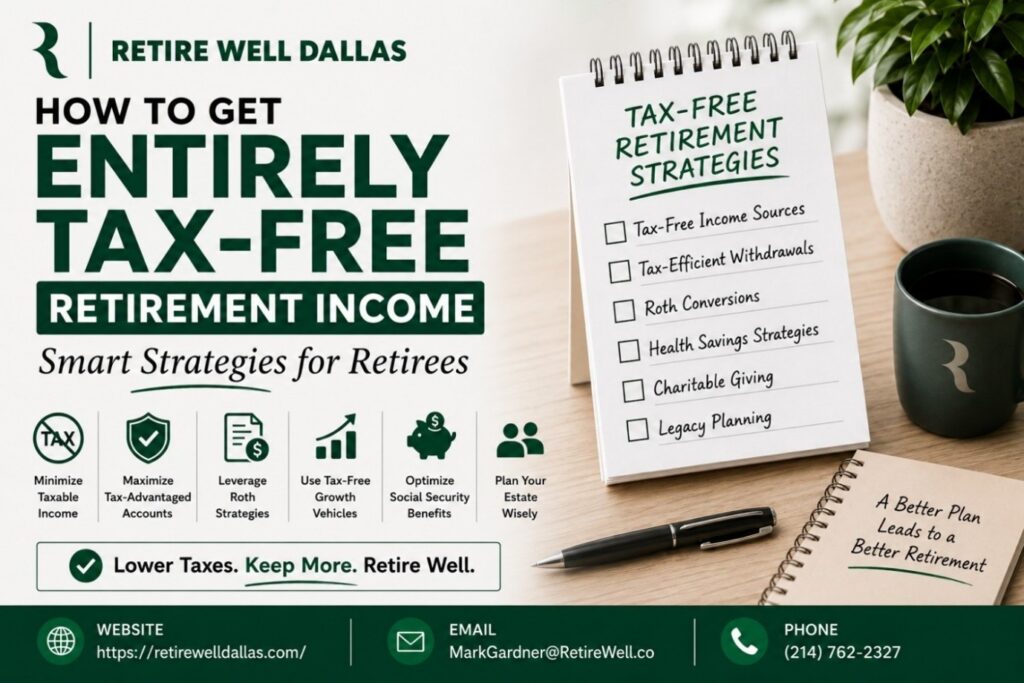
Overview: Many retirees want to keep more of their income and pay less in taxes. This guide explains how to get entirely tax free retirement income through Roth planning, tax diversification, withdrawal timing, and retirement income coordination. You will learn practical ways to build a more flexible retirement plan while avoiding common tax mistakes that can reduce your long-term income.
Retirement should feel like a reward, not a tax puzzle. If you have ever wondered how to get entirely tax free retirement income, you are not alone. Many retirees want more control over their money and fewer surprises from the IRS. While a completely tax-free retirement is not possible for everyone, the right strategy can help create more tax free retirement income and improve your financial flexibility for years ahead.
Taxes matter because every dollar paid in taxes is a dollar that cannot support your lifestyle, healthcare, travel plans, or family goals. Retirement income can come from taxable, tax-deferred, and tax-free sources. The way these income streams work together often determines how much you keep. While completely tax-free retirement may not be realistic for everyone, certain strategies may help reduce taxes significantly.
What Is Tax-Free Retirement Income?
Tax-free retirement income refers to money you receive that is not subject to federal income tax under current tax rules. This often includes qualified Roth IRA withdrawals and certain insurance-based income strategies when structured properly.
A common misunderstanding is that all retirement income is tax-free once you stop working. That is rarely the case. Pension income, traditional IRA withdrawals, and portions of Social Security benefits may still be taxed. Tax-free income depends on where the money comes from and how it is withdrawn.
Strategy #1 – Build Roth IRA Income Sources
When people ask about creating tax free retirement income, Roth accounts usually enter the conversation quickly. That is because qualified Roth IRA withdrawals are generally not subject to federal income tax.
Think of a Roth IRA like planting a tree. You pay taxes on the seed today, but the fruit can be enjoyed later without additional federal income taxes if rules are met. For many retirees, Roth accounts provide flexibility when managing future income needs and tax exposure.
Strategy #2 – Use Tax Diversification to Your Advantage
One of the most effective tax free retirement income strategies involves diversification. Most investors diversify their investments. Fewer people diversify their tax treatment.
A balanced retirement plan may include taxable brokerage accounts, tax-deferred retirement accounts, and tax-free accounts. Having multiple buckets of money allows you to choose where income comes from each year. That flexibility may help you manage taxable income and avoid unnecessary tax surprises.
Strategy #3 – Coordinate Social Security and Withdrawals Carefully
The timing of withdrawals can make a significant difference in retirement taxes. Many retirees assume Social Security benefits are automatically tax-free. That is not always true.
The IRS looks at your combined income when determining whether benefits become taxable. By coordinating withdrawals from different accounts, you may be able to manage income thresholds more effectively. Small adjustments today can sometimes produce meaningful tax savings over time.
Strategy #4 – Consider Tax-Efficient Insurance-Based Income Tools
Insurance products can play a role in retirement income planning when used appropriately. Certain annuity structures and cash-value life insurance strategies may offer tax advantages under specific circumstances.
These tools are not one-size-fits-all solutions. Their value depends on your goals, income needs, estate plans, and overall financial picture. A retirement strategy should always look beyond investments and consider how different income sources work together throughout retirement.
Strategy #5 – Reduce Future Required Minimum Distribution Pressure
Many retirees focus only on current taxes and forget about future tax obligations. Required Minimum Distributions, often called RMDs, can create larger taxable income later in life.
Planning before retirement may help reduce this pressure. Roth conversions are one option some retirees explore. By gradually shifting assets into Roth accounts during lower-income years, you may reduce future taxable withdrawals and create more flexibility down the road.
Strategy #6 – How to Get Entirely Tax Free Retirement Income in a Texas-Friendly Tax Environment
Location matters. Texas does not impose a state income tax, which can benefit retirees seeking a more tax free retirement lifestyle.
Still, moving to Texas does not automatically eliminate taxes. Federal income taxes may still apply depending on your income sources. Think of state tax savings as one piece of a larger retirement income puzzle rather than a complete solution.
Common Mistakes That Increase Retirement Taxes
Many retirement tax problems are avoidable. One common mistake is taking large withdrawals in a single year. This can push income into higher tax brackets and increase Medicare premium costs.
Another issue is poor withdrawal sequencing. Pulling money from the wrong account at the wrong time can create unnecessary tax consequences. A coordinated income strategy often produces better outcomes than making withdrawal decisions year by year without a plan.
Can You Really Have Entirely Tax-Free Retirement Income?
The honest answer is that it depends. Some retirees may structure portions of their income to be tax-free. Others may reduce taxes substantially without eliminating them completely.
The goal is not always reaching zero taxes. Often, the bigger win is creating a retirement income plan that gives you control, flexibility, and confidence. Understanding how to get entirely tax free retirement income starts with knowing your options and building a strategy around your personal goals rather than chasing a perfect outcome.
Build a More Tax-Efficient Retirement Income Strategy
A successful retirement plan is about more than investments. It is about creating income, managing taxes, protecting your lifestyle, and preparing for future changes. When taxable, tax-deferred, and tax-free income sources work together, retirement becomes more predictable and efficient.
At Retire Well Dallas, we help you build tax-smart retirement income strategies designed around your life and goals.
Book a Retirement Planning Consultation.
Frequently Asked Questions
1.How do you get tax-free retirement income?
Tax-free retirement income may come from qualified Roth withdrawals, careful income coordination, strategic planning, and diversified retirement account structures.
2. Is retirement income tax-free?
Some retirement income may be tax-free, while other income sources remain taxable. The tax treatment depends on account type, withdrawal method, and current tax rules.
3. What are tax-free retirement income strategies?
Common approaches include Roth planning, tax diversification, strategic withdrawal timing, and managing future required minimum distributions.
4. Can Social Security be tax-free?
Yes, in some situations. Whether Social Security benefits are taxed depends on your total income and applicable IRS thresholds.
5. Why is tax diversification important in retirement?
Tax diversification gives you more control over where retirement income comes from, helping you manage taxes and preserve long-term income flexibility.