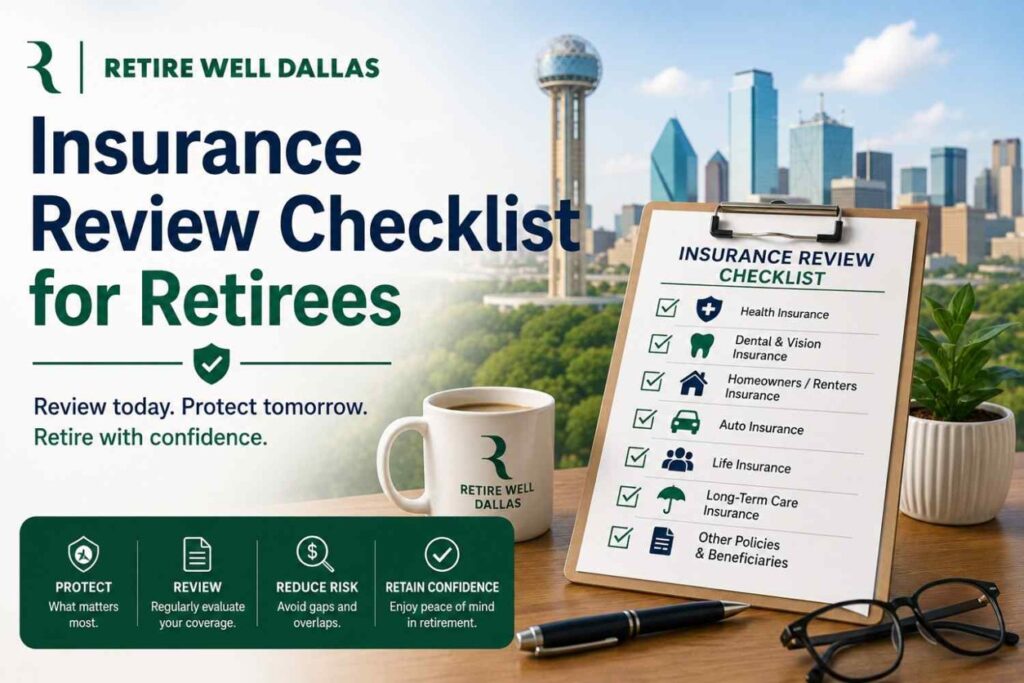
Retirement brings major financial changes, and your insurance coverage should evolve along with your new stage of life. A retirement insurance review checklist can help you identify coverage gaps, remove unnecessary expenses, and ensure your policies continue supporting your retirement goals.
Many retirees review their investments, Social Security strategy, and tax planning but overlook insurance decisions that can have a significant impact on their financial security. The policies that made sense during your working years may no longer provide the right level of protection after retirement.
Your income sources, healthcare needs, family responsibilities, and estate planning goals often change once you stop working. Employer-sponsored benefits may expire, Medicare decisions become important, and your need for certain types of coverage may shift.
A regular insurance review helps ensure your coverage aligns with your current financial situation rather than the circumstances you had years ago. Reviewing your policies at key retirement milestones can help you avoid paying for unnecessary coverage while protecting against risks that could affect your savings.
Why Your Insurance Needs Change the Moment You Retire
Retirement changes the way you think about risk. During your working years, insurance often focused on protecting your income, supporting dependents, and covering employer-related benefits. After retirement, the focus shifts toward protecting your assets, managing healthcare costs, and preserving your financial independence.
A detailed retirement insurance review checklist helps retirees evaluate whether their existing policies still match their current needs. For example, a life insurance policy purchased decades ago may have been designed to replace employment income, but your financial priorities may now include estate planning, legacy goals, or healthcare expenses.
Healthcare coverage is another major transition. As you approach Medicare eligibility, decisions between Medicare Advantage and Medicare Supplement plans can affect your healthcare costs and flexibility for years.
Retirement is also a time when beneficiary designations, long-term care planning, and liability protection become increasingly important. A comprehensive review ensures your insurance strategy works together with your overall retirement plan.
The Retirement Insurance Review Checklist
Insurance decisions can become more complex during retirement because multiple areas of your financial life are connected. Use this checklist to review the key coverage areas that deserve attention.
1. Life Insurance Need Reassessment
One of the first questions retirees should ask is whether they still need their current life insurance coverage. The question of life insurance still needed in retirement depends on your financial obligations, dependents, estate goals, and available assets.
If your spouse, children, or other dependents still rely on your income or assets, maintaining coverage may still be important. Life insurance may also play a role in covering estate taxes, providing inheritance, or supporting charitable goals.
However, some retirees may discover that the original purpose of their policy no longer exists. For example, if your mortgage is paid off, children are financially independent, and your retirement income is sufficient for your spouse, maintaining a large policy may no longer be necessary.
Another important consideration is employer-provided life insurance. Many retirees lose access to workplace coverage when they leave their job. Reviewing replacement options before retirement can prevent unexpected gaps in protection.
A careful review can help determine whether you should keep, reduce, replace, or restructure your existing coverage.
2. Medicare Advantage vs. Medicare Supplement Comparison
Healthcare is one of the largest retirement expenses, making Medicare decisions an essential part of your insurance planning. A proper Medicare supplement checklist can help you compare coverage options based on your healthcare needs and financial priorities.
Medicare Advantage plans and Medicare Supplement plans work differently. Medicare Advantage plans are offered through private insurers and often combine Medicare Part A and Part B coverage with additional benefits. Medicare Supplement plans help cover certain out-of-pocket costs that Original Medicare does not pay.
When comparing options, retirees should review:
- Monthly premiums and expected healthcare expenses
- Provider networks and doctor availability
- Prescription drug coverage
- Travel and specialist needs
- Out-of-pocket maximums
The right choice depends on your health situation, preferred doctors, budget, and lifestyle. A plan that works well for one retiree may not be ideal for another.
Medicare coverage should also be reviewed annually because plan benefits, costs, and healthcare needs can change over time.
3. Long-Term Care Coverage Gap Check
Long-term care is one of the most overlooked retirement risks. A long-term care insurance review can help determine whether your current strategy provides enough protection if you need assistance with daily activities in the future.
Many retirees assume Medicare will cover long-term care expenses, but Medicare generally does not pay for extended custodial care. Costs for nursing homes, assisted living, or in-home care can significantly affect retirement savings without proper planning.
When reviewing long-term care coverage, consider:
- Existing long-term care insurance benefits
- Family support availability
- Retirement savings and income sources
- Potential healthcare costs
- Your preferred care options
Some retirees may have older long-term care policies that need review because benefits, inflation protection, and coverage amounts may no longer match current healthcare costs.
Planning ahead can help protect your retirement assets and reduce the financial burden on family members.
4. Umbrella and Liability Coverage Adequacy
As your assets grow, protecting them becomes increasingly important. Umbrella liability insurance provides additional protection beyond the limits of standard homeowners and auto insurance policies.
Retirees should review whether their current liability coverage matches their financial situation. A serious accident, property claim, or legal judgment could create significant financial stress if coverage limits are too low.
Consider reviewing:
- Home and auto liability limits
- Rental properties
- Investment properties
- Personal assets
- Lifestyle changes
For retirees with significant savings or multiple assets, additional liability protection may provide valuable peace of mind.
5. Beneficiary Designation Audit Across All Policies and Accounts
A beneficiary designation review is an important part of retirement planning because outdated beneficiaries can create unintended results.
Beneficiary designations often appear on:
- Life insurance policies
- Retirement accounts
- Annuities
- Investment accounts
These designations typically override instructions in a will, meaning outdated information can cause assets to transfer differently than intended.
Major life events should trigger a review, including:
- Marriage or divorce
- Death of a beneficiary
- Birth of children or grandchildren
- Changes in family relationships
A regular insurance policy review checklist should include verifying beneficiary names, contact information, and the percentage assigned to each person.
Keeping beneficiary information updated helps ensure your assets are distributed according to your wishes.
Red Flags That Mean It’s Time for a Professional Review
Certain situations indicate that your insurance coverage may need immediate attention.
Consider scheduling a review if:
- You recently retired or are preparing to leave the workforce.
- You are approaching age 65 and need to evaluate Medicare options.
- You experienced a major life event such as marriage, divorce, death, or inheritance.
- You have not completed an insurance review in more than three years.
- Your financial situation has changed significantly.
An annual insurance review retirees should complete can help identify changes before they become costly problems. Reviewing coverage regularly allows you to adjust policies based on your current needs instead of reacting after an unexpected event.
How Often to Redo This Checklist
Insurance needs are not permanent. As your retirement changes, your coverage should be reviewed regularly.
For most retirees, an annual review is a practical approach. Medicare provides a natural yearly checkpoint through the Annual Enrollment Period, which runs from October 15 through December 7. During this period, retirees can evaluate Medicare Advantage and prescription drug plan changes for the upcoming year.
Beyond Medicare decisions, retirees should revisit insurance coverage after major financial or personal changes. Retirement, moving, changes in health, family updates, or significant asset changes can all affect your insurance strategy.
Regular reviews help ensure your coverage remains aligned with your retirement goals while avoiding unnecessary costs.
Get a Second Set of Eyes on Your Coverage
Insurance decisions become more important as you enter retirement because they directly affect your financial security, healthcare choices, and ability to protect your assets.
A professional review can help you identify coverage gaps, evaluate existing policies, and determine whether your insurance strategy still fits your retirement plan.
At Retire Well Dallas, we help retirees take a comprehensive look at their insurance needs as part of a broader retirement planning strategy. A complimentary insurance review can provide clarity and help you make informed decisions about your future.
Schedule a consultation with Retire Well Dallas to review your current coverage and explore whether adjustments may better support your retirement goals.
Frequently Asked Questions
1. Why do retirees need an insurance review?
A retirement insurance review helps identify outdated coverage, reduce unnecessary costs, and ensure policies align with changing healthcare, family, and financial needs.
2. How often should retirees review insurance policies?
Most retirees should complete an annual insurance review retirees can use to evaluate coverage changes, Medicare options, and evolving retirement priorities.
3. Do I still need life insurance after retirement?
Whether life insurance still needed in retirement depends on income needs, dependents, estate goals, and your overall financial situation.
4. What should a Medicare review include?
A Medicare supplement checklist should include premiums, healthcare providers, prescription coverage, benefits, and potential out-of-pocket expenses.
5. Why is a beneficiary review important?
A beneficiary designation review ensures retirement accounts and insurance policies transfer according to your current wishes after major life changes.